
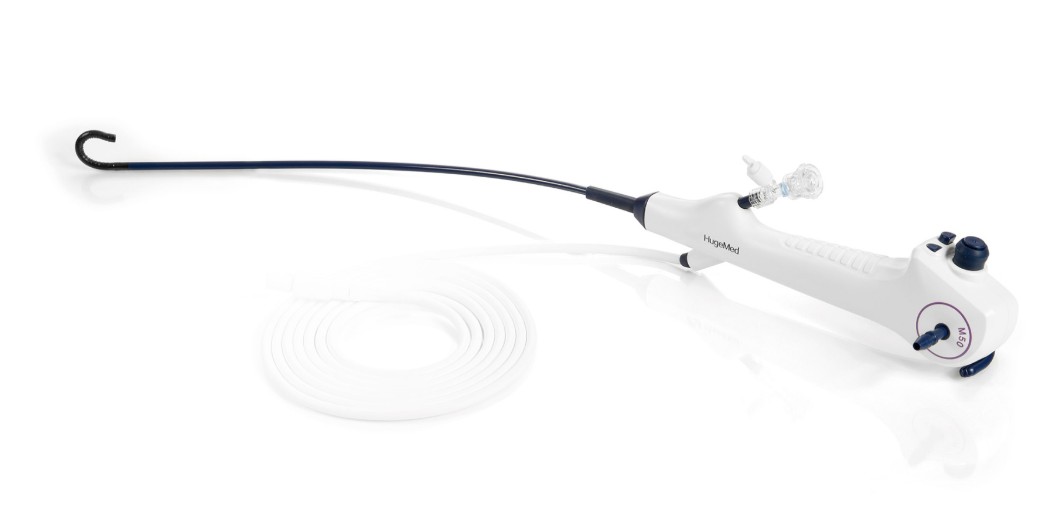
Transurethral laser ablation (TULA) is rapidly becoming an important alternative to traditional theatre‑based TURbt (Trans Urethral Resection of Bladder Tumour), offering a safe, efficient and patient‑centred approach for individuals undergoing surveillance for recurrent non‑muscle‑invasive bladder cancer. Increasingly adopted across the UK, the technique allows clinicians to treat small, low‑risk recurrences in the outpatient setting, avoiding the need for general anaesthetic and reducing the burden on theatre capacity.
A Safe, Quick and Well‑Tolerated Outpatient Procedure
TULA is performed during a standard flexible cystoscopy appointment and typically takes less than 15 minutes. Because no general anaesthetic is required, the procedure is particularly valuable for:
– Elderly or frail patients
– Patients with significant comorbidities
– Individuals for whom general anaesthetic carries avoidable risk
– Patients undergoing frequent surveillance (every 3, 6 or 9 months)
Most patients tolerate the procedure extremely well, and recovery is immediate — they are able to leave clinic shortly after treatment.
The shift toward outpatient laser ablation has been strongly supported by:
– BAUS (British Association of Urological Surgeons)
– GIRFT (Get It Right First Time)
Both organisations highlight TULA as resource‑efficient and patient‑centric alternative to transurethral resection of bladder tumour (TURbt), which traditionally requires theatre time, anaesthetic support and postoperative recovery.
The Laser Platform
The procedure is performed using a quiet and compact diode laser system which delivers energy through a 400 μm laser fibre passed down the working channel of a flexible cystoscope (a more flexible 200 μm fibre is also available for when the scope needs to deflect further). The laser offers two therapeutic wavelengths: 980 nm for a coagulation effect and 1470 nm, which gives more of a cutting effect. However, this is where a significant challenge has emerged.
The Problem: Visual Distortion with Some Flexible Cystoscopes
Several reusable and single‑use flexible video-cystoscopes experience significant image distortion or interference when the laser is firing. For clinicians, this is a critical issue. Clear visualisation is essential when ablating small bladder lesions, and any distortion compromises precision, confidence and safety.
This challenge has become a key barrier for some units looking to expand their outpatient laser ablation service.
The novus med Solution: The HugeMed Single‑Use Flexible Cystoscope
novus med offers a reliable alternative designed specifically with therapeutic procedures in mind: the HugeMed single‑use flexible cystoscope.
- Full compatibility with both 980 nm and 1470 nm wavelengths, avoiding the interference seen with some other manufacturers’ scopes
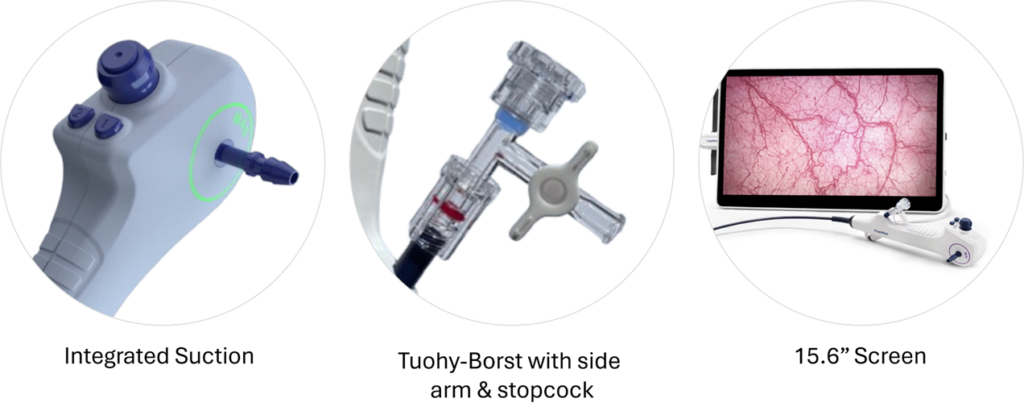
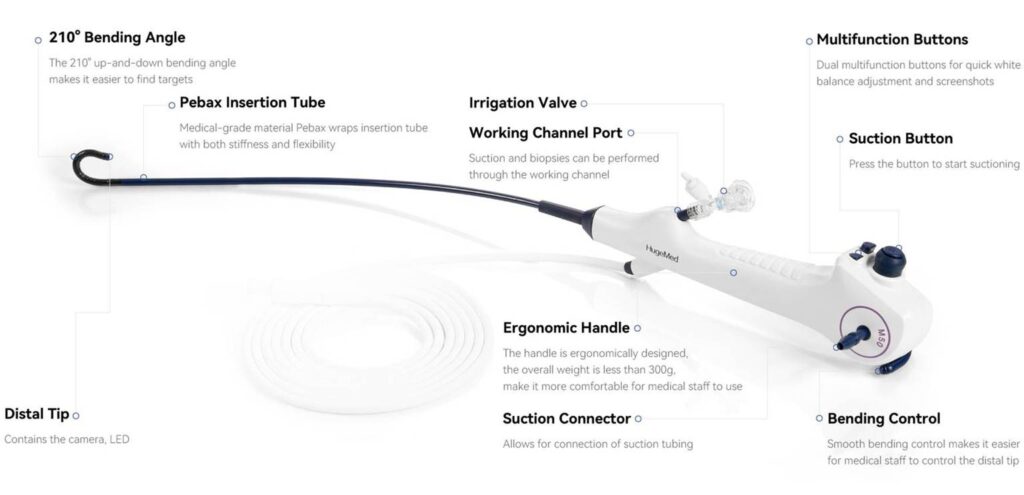
- Built in suction and large 2.8mm channel for rapid bladder evacuation for improved vision
- Tuohy Borst with side arm adapter and stopcock included, enabling controlled irrigation from the sterile field
- Two scope sizes: standard 15 Fr and a slimmer 12 Fr option for tighter anatomies or patient comfort
- Flexible viewing options: supplied with either a large 15.6” monitor or a control box for connection to your existing stack or monitor
- Available via the NHS supply chain
Together, these features make the HugeMed cystoscope a dependable choice for outpatient laser ablation, ensuring clinicians maintain a clear, stable view throughout the procedure.
Supporting the Expansion of Outpatient Bladder Cancer Care
As more centres adopt TULA to improve patient experience and reduce theatre pressures, the need for reliable, interference‑free visualisation becomes increasingly important. The HugeMed single‑use flexible cystoscope provides a practical, high‑performance solution that supports safe, efficient and cost‑effective outpatient treatment.
Clinicians interested in further information or wishing to arrange an evaluation of the HugeMed flexible cystoscope are encouraged to get in touch with novus med.


 Call
Call 

