
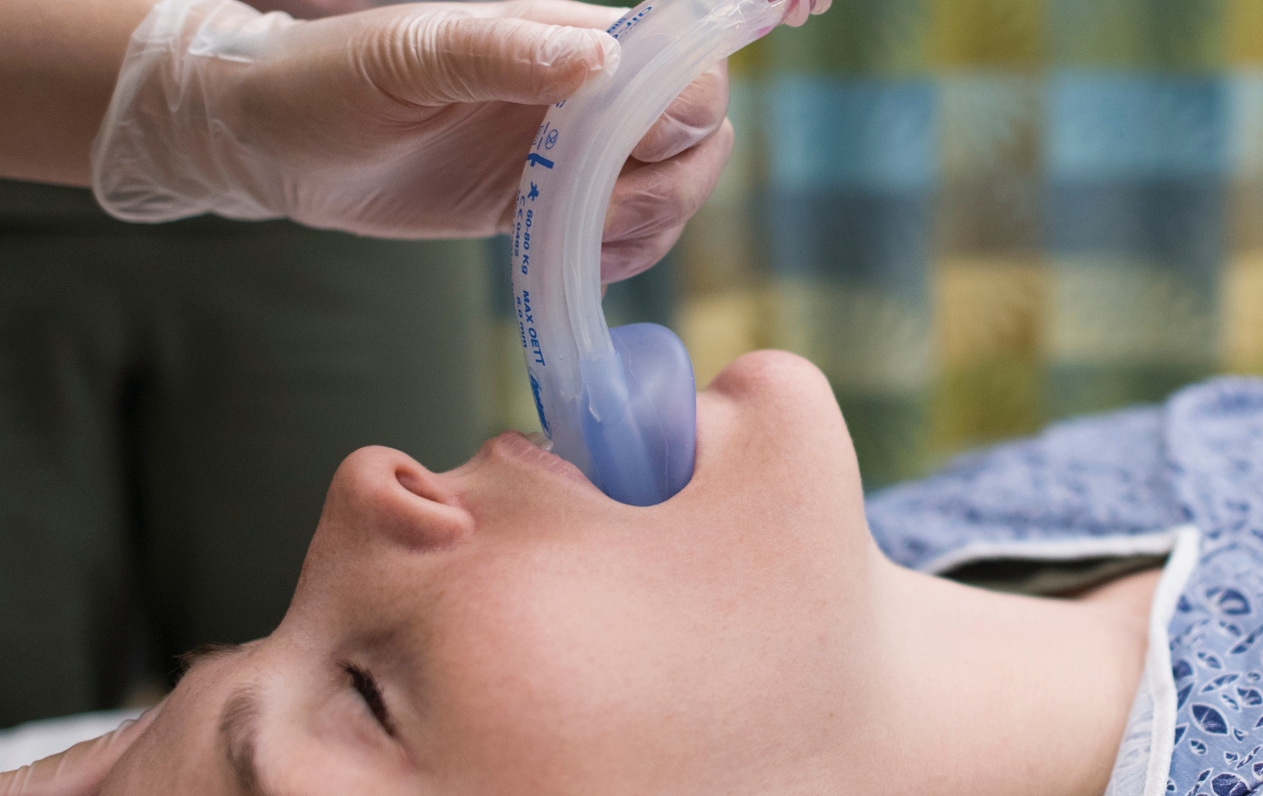
Supporting evidence-based airway management for mechanically ventilated patients
Mechanical ventilation is a cornerstone of modern critical care, providing life-saving respiratory support for patients with a wide range of acute conditions. Alongside ventilation, effective airway management is essential to help maintain a clear airway, optimise gas exchange and support patient care.
For mechanically ventilated patients, airway suctioning is a routine and important intervention. Over the past four decades, clinical practice has increasingly incorporated closed suction systems as an alternative to traditional open suction techniques, allowing clinicians to remove secretions while maintaining the ventilator circuit.
Today, closed suction is widely used in many intensive care settings as part of evidence-based airway management. Its role should be understood within the context of patient assessment, clinical indication and appropriate suctioning technique, rather than as a universal solution for all patients or care settings.
Why airway suctioning matters
Patients with an artificial airway are often unable to clear respiratory secretions effectively. Without appropriate secretion management, mucus can accumulate within the airway, potentially increasing airway resistance, impairing ventilation and making it more difficult to maintain adequate oxygenation.
Regular assessment and suctioning, when clinically indicated, remain fundamental aspects of caring for mechanically ventilated patients. The decision to suction should be guided by patient need, clinical signs and local protocols.
Open versus closed suction
Traditional open suction requires the patient to be disconnected from the ventilator while a sterile suction catheter is inserted into the endotracheal or tracheostomy tube.
Closed suction systems, by contrast, keep the catheter enclosed within the ventilator circuit, allowing suctioning to be performed without disconnecting the patient.
Maintaining the ventilator connection during suctioning may help, depending on the patient, procedure and clinical context, to:
- Maintain ventilation during the procedure.
- Support oxygenation.
- Help preserve Positive End Expiratory Pressure, known as PEEP.
- Minimise disruption to the ventilator circuit.
- Reduce unnecessary handling of airway equipment.
These potential, procedure-specific benefits have contributed to the use of closed suction systems across many modern intensive care units. However, suctioning should always be performed according to clinical need, evidence-based guidance and patient tolerance.
Supporting best practice
Closed suction should not be viewed simply as a device, but as one component of a broader airway management strategy.
Current clinical guidance continues to emphasise the importance of evidence-based suctioning practices, careful patient assessment and the use of appropriate techniques to support safe, effective care.
Alongside suctioning, effective airway management may also include:
- Structured oral care.
- Endotracheal tube maintenance.
- Humidification.
- Infection prevention measures.
- Ongoing patient assessment.
Together, these interventions support a consistent, multidisciplinary approach to caring for mechanically ventilated patients.
Continuing innovation
Although closed suction has become established within critical care, innovation continues to support the evolution of airway management.
For more than 40 years, AirLife has helped shape the development of closed suction technology and continues to invest in solutions designed to support clinicians delivering evidence-based care. Innovations such as Ballard™ Turbo-Cleaning demonstrate how product design continues to evolve to support catheter cleanliness, workflow efficiency and continuity of ventilation.
Where microbiology evidence is referenced in relation to Turbo-Cleaning, it should be clearly understood in context. Available evidence may include in-vitro, simulated-use studies assessing catheter cleanliness under controlled conditions. Such studies can help inform understanding of product performance, but they should not be interpreted as direct evidence of reduced clinical infection, ventilator-associated pneumonia or improved patient outcomes unless supported by clinical outcome data.
Combined with structured oral care systems, endotracheal tube maintenance devices and airway accessories, the Ballard portfolio reflects a comprehensive approach to airway management rather than focusing on suction alone.
Structured oral care and airway management
Closed suction and oral care are closely connected within the broader care of mechanically ventilated patients. Structured oral care forms part of a ventilator-care approach and supports consistent oral hygiene for patients with artificial airways.
Oral care products are tools that help clinicians deliver regular, standardised oral hygiene as part of wider care bundles and local protocols.
Looking beyond the product
As healthcare continues to evolve, education remains just as important as innovation.
Understanding when suctioning is required, applying best practice techniques and selecting appropriate airway management solutions all contribute to safer, more consistent patient care. By combining clinical evidence with ongoing education, healthcare organisations and manufacturers can work together to support high-quality airway management across the ICU.
Closed suction has become an important part of modern critical care because it supports secretion management while allowing the ventilator circuit to remain connected during suctioning. As clinical evidence continues to develop, the focus remains on helping clinicians deliver safe, evidence-based airway management for mechanically ventilated patients.
By supporting education, innovation and clinical best practice, AirLife, with the support of novus med, continues to work alongside critical care teams to advance airway management and support patient care.
Supporting clinical evidence for further reading
Blakeman TC, et al. AARC Clinical Practice Guidelines: Artificial Airway Suctioning. Respiratory Care. 2022;67(2):258–271.
American Association for Respiratory Care. Endotracheal Suctioning of Mechanically Ventilated Patients with Artificial Airways. Respiratory Care. 2010;55(6):758–764.
Klompas M, et al. Strategies to Prevent Ventilator-Associated Pneumonia, Ventilator-Associated Events and Non-Ventilator Hospital-Acquired Pneumonia in Acute Care Hospitals: 2022 Update. Infection Control & Hospital Epidemiology. 2022.
Corley A, Fraser J, et al. Lung Volume Changes During Cleaning of Closed Endotracheal Suction Catheters: A Randomised Crossover Study Using Electrical Impedance Tomography. Respiratory Care. 2013.


















 Call